We’re thrilled to introduce you to some of Third Edition’s exciting enhancements, starting with Harmony Storybook Clubhouse Friends. In our new stories, the Clubhouse Friends will explore cooperation, listening to others, and so much more, with backgrounds that make their stories relatable to students and enrich the learning experience.
We pride ourselves in providing CASEL-aligned curriculum that continues to evolve based on the latest research and findings in healthy learning education. Harmony Third Edition is no exception. The new enhancements will:
Build upon our trusted healthy learning curriculum.
Give teachers easy ways to bring healthy learning to life for students through stories, activities, and everyday practices.
Equip educators to foster communication, connection, and community in and outside the classroom.
As we approach the launch of Harmony Third Edition, we will share more exciting highlights. You’ll also see that a lot of what makes Harmony unique remains the same, particularly our commitment to fostering healthy relationships and inclusive learning environments.
Check back with this page for each new sneak peek of upcoming enhancements. And rest assured, the current edition of Harmony will remain available in the Online Learning Portal to help make your transition to Harmony Third Edition as easy as possible. Not a Harmony user yet? Register at no cost today!
Get ready for new games, storybooks, and unit structures.
June 2, 2021
Implementing Harmony into your learning environment will be easier than ever before when Harmony Third Edition launches! In March, we announced that we were updating Harmony with additional games and storybooks and an all-new unit structure, but that’s not all we have in store for you.
Based on the latest research in healthy learning, our new unit structure centers on building harmonious relationships and creating inclusive environments where all students feel valued and heard and develop a sense of agency within their educational experience.
The new unit structure will include a curriculum map to aid in implementation and a revised lesson structure for increased accessibility to our content. With Harmony Third Edition, you’ll be able to complete lessons in just 15-20 minutes!
To create a truly comprehensive program, Harmony Third Edition will offer grade-level specific content for all grades, as well as offer point of use access to Inspire Teaching & Learning modules to support adult well-being. We will also be expanding our out-of-school-time offerings, customized for OST program providers.
In an effort to support the evolving needs of today’s learners, educators, and families, Harmony Third Edition’s curriculum will focus on enhancing cultural competence, equity, and student voices.
As the needs of learners and educators evolve, Harmony evolves with them. These upcoming changes will be available beginning in the fall, ensuring you have the tools you need to implement Harmony Third Edition.
We will continue to support long-term needs and safe, inclusive learning environments. Harmony’s program will continue to empower the voices of students and teachers, equip educators and caregivers with culturally responsive practices, and support development and academic success. Thank you for choosing Harmony for the students in your life!
Register in the Harmony Online Learning Portal for access to our full curriculum, and follow us on social media for more updates!
Educators Across the Country Find Value in Harmony SEL
See what teachers and SEL implementers had to say in our latest broad usage survey.
Since the inception of Harmony SEL, researchers have examined the benefits of our program in several studies (e.g., DeLay et al., 2016; Hanish et al., 2016; Miller et al., 2017). The initial research found that students who participated in Harmony experienced a variety of positive results. These outcomes include increased writing and math performance, friendship development with diverse peer groups, relationship-building with feelings of inclusion, and engagement in school, as well as decreases in teasing and aggression.
From the research, we know that Harmony produces positive effects in youth. We also want to understand the perceptions of educators who have used the program. In 2019, a group of 999 teachers, school counselors, instructional coaches, SEL learning specialists, speech-language pathologists, and site coordinators responded to a survey about their use of Harmony SEL from the Center for Research and Reform in Education at Johns Hopkins University. This easy-to-read infographic presents educators’ survey responses reflecting their reactions to Harmony, perceived impacts on students’ competencies, and how often they used Harmony resources. Download and review the infographic here:
New Research Suggests Consistent Implementation Leads to Success
Read the latest brief from Harmony Academy and Johns Hopkins University Ever wonder how consistently implementing healthy learning practices influences student outcomes as they learn and grow? Social, personal, and academic development is a priority among educators and school leaders who may activate many strategies and supports, such as the Harmony Curriculum, to reach their goals.
We want practitioners and administrators to be successful, so we partnered with researchers at Johns Hopkins University to take an in-depth look at what Harmony schools experience when they use the program over time. By observing a group of Harmony Showcase Schools, researchers found out how principals, teachers, and students responded to Harmony in their first and second years of implementation. We found that teachers implemented the program more consistently and with improved implementation in their second year.
While putting a schoolwide program like Harmony into practice can be challenging, especially during the initial execution, the research in this study suggests that when schools sustain their implementation past the initial growing pains, they find even more benefits beyond the first year. Read the full research brief to learn how educators and students engaged with Harmony in both years one and two. Based on the findings, you will discover potential implications to take back to your setting to successfully implement Harmony healthy learning.
Read Healthy Learning Best Practices for School Leaders and Principals
Access the latest research-to-practice brief from Johns Hopkins University and Harmony Academy.
School leaders have a clear role to play in supporting healthy learning within their schools and with their out-of-school time partners. Many school leaders want to implement healthy learning strategies but face key challenges when they attempt to integrate this programming into their school structure. Common challenges include lack of instructional time, inadequate implementation support, and limited common knowledge of healthy learning practices among teachers and support staff. We partnered with Johns Hopkins University to find research-based solutions and practices that school leaders and principals can activate for successful Harmony-Academic integration and outcomes, particularly when schools and communities implement the Harmony Curriculum.
Download our latest research-to-practice brief, full of best practices that support schoolwide implementation of healthy learning programs and practices.
This new research gives particular attention to strategies and research support related to Harmony, an evidence-based healthy learning program affiliated with National University, and to other approaches used by school leaders nationally, to promote effective implementation of Harmony-Academic integration in their schools. This report builds on work presented in an earlier brief developed for classroom teachers (Reilly, Yoder, Ross, et al., 2021). Access the brief for teachers here.
Learn more at harmony-academy.org.
Harmony And Johns Hopkins University Share Healthy Learning Best Practices
Harmony And Johns Hopkins University Share Healthy Learning Best Practices
Download the latest research-to-practice brief on the components of effective social, personal, and academic development..
Now more than ever, educators want strategies to support the social, personal, and academic needs of their students. However, it is not always clear where to start, or which active ingredients are needed for effective healthy learning programs. Fortunately, research demonstrates what classroom teachers need to understand about effective strategies that promote the social, personal, and academic development of students.
In a new research-to-practice brief, researchers and practitioners from Johns Hopkins University and Harmony Academy explore what Harmony entails, its research base, and most critically, the best practices for implementing Harmony in contemporary classrooms.
Ready to enrich your learning community? Download the full article at no cost to inform healthy learning implementation in your classroom or district.
Do you want to bring Harmony to your school or district? Learn more on our websiteharmony-academy.org.
9 Educators We’re Celebrating for Women’s History Month
Wednesday, March 03, 2021
Learn more about the women who have influenced our team…
March is Women’s History Month, and our teams at Harmony Academy are celebrating women who have shaped the field of education and championed social, personal and academic learning. Get to know the people behind our programs and the women who inspire us to #ChoosetoChallenge!
Charlotte Danielson Ask Elle Essenmacher which women have inspired her as an educator, and she’ll tell you Charlotte Danielson! Founder of the Danielson Framework for Teaching, Ms. Danielson has spent more than 50 years as a leader for teacher preparedness and development around the world. As a Strategic Accounts Advisor, Elle has seen the positive influence of Ms. Danielson and the Danielson Group’s hard work in the lives of students and teachers in the field.
Mary Catherine Swanson Josh Pauly, an ambassador in Minnesota, looks up to Mary Catherine Swanson, the founder of AVID, an approach that has made college more attainable for millions of students. Josh reflects on the influence of Ms. Swanson on his work with Harmony, “I see Harmony as being a similar vessel to AVID, as both provide students with opportunities and teach them skills that will help them in school and in life.”
“Once our students find their voices, there’s nothing they can’t achieve.” – Mary Catherine Swanson
Fanny Jackson Coppin Jakotora Tjoutuku, an implementation specialist in New York City, celebrates Fanny Jackson Coppin, the first Black teacher at Oberlin Academy (now Oberlin College). Ms. Coppin was born into slavery and as an adult she blazed a trail for women and Black students to pursue education. Jako says, “What inspires me about Fanny Jackson Coppin is how much of a well-rounded and full life she led. She was not only an inspiring educator, but very involved in her church and community.”
Maria Montessori Shannon Smith, a regional manager for Harmony, has seen the benefits of encouraging students’ autonomy in her education journey. Shannon’s approach to learning has been influenced by Maria Montessori and her advocacy for equipping teachers and students with the tools and instruction they need to succeed.
“The child is endowed with unknown powers, which can guide us to a radiant future.” – Maria Montessori
Gabriela Mistral Harmony’s Senior Manager of Partnerships, Veronica Calvo, looks up to Chilean educator and writer Gabriela Mistral, who said, “Many things we need can wait. The child cannot. To him we cannot say tomorrow, his name is today.” During the early 20th century, Ms. Mistral worked to expand access to education and develop social and economic equity for young students all over Chile and throughout the world. In 1945, she became the first Latin American writer to win the Nobel Prize for Literature.
Helen Keller Harmony National Director, Lauren Puzen’s respect for Helen Keller’s achievements has grown along with her own development as a public health educator. “As a child I remember learning of Helen Keller and her story felt heroic, something that I knew changed the world with an individual’s actions. Today I realize the complexity of structural inequity she faced, and how her lifting her voice for others takes true courage, focus, and perseverance.”
“Life is a succession of lessons which must be lived to be understood.” – Helen Keller
Dr. Teri Marcos Some of our role models have directly influenced our own education journeys. This is the case for Amanda Rothengast, Senior Manager, Educator Advocacy. Amanda credits Dr. Teri Marcos, Professor and Interim Academic Program Director, Ed.D. in Organizational Innovation at National University, for encouraging her to pursue the next chapter in her education as a Ed.D. candidate. Dr. Marcos works extensively to understand and support the needs of high-performing, low socioeconomic communities.
Mary McLeod Bethune Our acting Program Manager of Harmony John Pickens names Mary McLeod Bethune as one of his heroes. Ms. McLeod Bethune is known for founding schools for African American girls and boys in Florida. Weaving together education, philanthropy, and civil rights advocacy, she helped children succeed and set a strong example of Black achievement and the power of learning throughout the country.
“The progress of the world will call for the best that all of us have to give.” – Mary McLeod Bethune
Ann Soldo Harmony Ambassador Sasha Breeden comes from a family of influential women in education for three generations and counting! Sasha’s grandmother Ann Soldo started it all — throughout her career, she led as a teacher and a principal in Watsonville, California, where a school is named after her. Ms. Soldo also held office as the first woman Mayor of Watsonville, California!
Thank you to all the women leaders and educators who invest time and energy in shaping a bright future for our students. We celebrate all of you! If you want to help your students talk about gender and friendship, the Harmony Lesson “Talk It Out” is a great place to start!
*These are the opinions and perspectives of the individuals and do not necessarily represent the opinions and perspectives of Harmony Academy National University.
My First Grade Teacher Taught Me About SEL
Now She’s 102 Years Old, and I’m Still Learning from Her
by Claudine S. James
Malvern Middle School English Teacher, National Board-Certified Teacher, 2019 Arkansas Teacher Award Winner
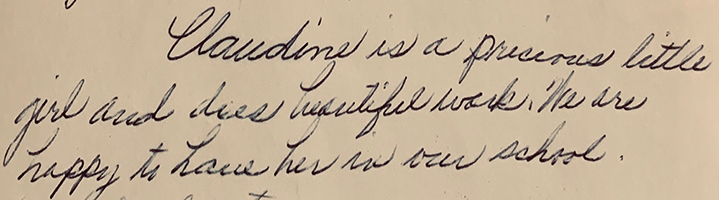
Fifty years ago, when I entered her classroom in January of 1974, I had no idea my first-grade teacher, Mrs. Remley, would provide a model for social emotional learning.
Born in 1917, she started teaching in 1937 and her memory is unrelentless. Mrs. Remley recalled not having electricity in her home until after graduating high school in 1935. Their family earned the money to pay the $1 monthly electric bill by milking cows and separating cream. She had to wait until the summer of 1936 to begin college because her family, like others across the United States, was reeling from the economic hardships of the Depression. After attending college and earning 45 credit hours, she returned to her hometown and taught school for one year. She then taught in several rural districts throughout the state before securing a teaching job at North Malvern Elementary in Malvern, Arkansas.
Mrs. Remley said under the leadership of Principal Eudora Fields, teachers were encouraged to develop and improve relationships with ALL students. However, it wasn’t until 1964 that the school was integrated and received its first African American students. She explained, “The memories of integration over fifty years later, have not escaped me.”
Mrs. Remley recalled that the first African American student was transferred to her room because the principal thought Mrs. Remley could provide a nurturing relationship to ensure the academic development of the student was not hindered.
That same empathetic spirit is what greeted me when I entered her classroom in January of 1974. As a shy seven-year-old, I began attending this neighborhood school.
Entering a classroom with new faces staring at me was horrifically frightening. One of my new classmates recognized me and came to greet me as Mrs. Remley introduced me to the class. “I know, Claudine,” the student said, “her grandfather cleans my dad’s business.” I was already burning inside with fright and nervousness, but those words, from a harmless six-year-old, crept down my spine sending shivers throughout my body and made me want to disappear and forget this momentous day ever began. But Mrs. Remley’s quick and kind response and her caring actions afterward instantly instilled confidence in me.
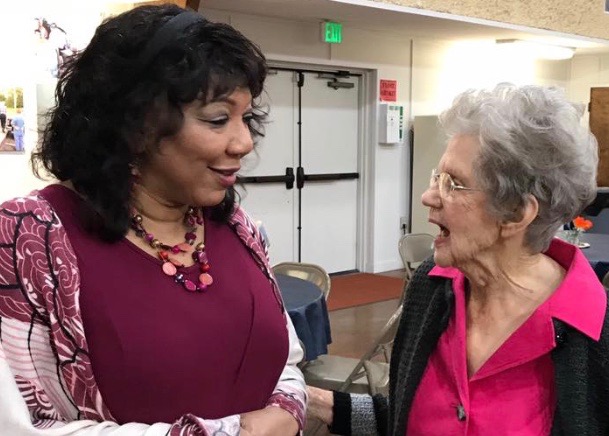
Years later, on graduation day, as my classmates and I walked across the field to receive our honor diplomas, the memories of my first day in Mrs. Remley’s class resurfaced. I wondered if Mrs. Remley was aware of how her actions had positively influenced my emotional and academic growth. I met with Mrs. Remley a couple of months ago. I was able to talk with her and I thanked her for being a significant part of my initial growth. Mrs. Remley was elated to learn this and shared her personal motto and approach to working with students: “First, I cared about students; secondly, I let them know I cared and then thirdly, I meant what I said!”
Mrs. Remley cared enough to be intentional in embracing the needs of ALL of her students. I am living proof that teachers’ actions change students’ lives.
How to Think Different
By Tom Whisinnand, 2019 Grand Prize Award Winner
In my classroom, I have these posters prominently displayed. Each one features an individual who is responsible for changing our world in some way: Albert Einstein, Jim Henson, and Amelia Earhart as well as other leaders. They all have had an incredible impact on our society, and you might also call them “inspirational.” Not all of their journeys were easy and, in some cases, the magnitude of their impact on the world went unnoticed for a long, long time.
In the 1990s, Apple Computers created an ad campaign entitled, “Think Different.” That campaign celebrated many individuals who did exactly that — they thought differently. One of the commercials in this campaign features some of the same people on the posters in my classroom, celebrating their persistence to change the world.
Is There a Link Between Inspiration and Idealism?
So, just what is it that caused these people to continue to “Think Different”? What caused them to persevere through tough times and hardships? How did they maintain their drive when obstacle after obstacle seemed to appear in their way? I have started to think, perhaps each of these individuals was an idealist. They never lost sight of the vision they initially had. They allowed their ideals to guide them instead of being weighed down by the practical limitations of their situations.
As I considered the link between idealism and inspiration, I wondered if the people who I consider inspirational in my community are also idealists. I decided to check in with a few people who I feel are successful to see if they would describe themselves as idealists.
Three People in My Life Who Think Different
The first person I checked in with, Tim McGee, is a successful real estate agent in Omaha, Nebraska. Tim was quick to identify himself as an idealist. From an early age, Tim has not wavered from reaching his goals. He was constantly striving to reach whatever benchmark of success he determined to be next in his life. Even today, he doesn’t let one setback determine his outlook on the next goal.
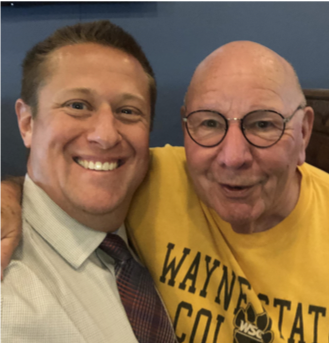
Next, I spoke with a long-time mentor and friend, Dr. Dennis Lichty, from Wayne State College. Dr. Lichty was a huge inspiration to me when I was completing my undergraduate degree, constantly modeling what it looked like to be a caring teacher.
Dr. Lichty wasted no time identifying himself as an idealist. In the many years he spent in the classroom and doing work for the Nebraska Education Association, he would always wake up believing that “today is going to be better than yesterday.” And each day Dr. Lichty’s students demonstrated that his idealism was not unfounded.
Finally, I asked the amazing counselor at Reagan Elementary about the connection between inspiration and idealism. Her name is Kaleigh Paben, and have I mentioned that she is AMAZING? Kaleigh is always positive and, even when she is dealing with some really tough student issues, she remains calm.
Like the two individuals before her, Kaleigh wasted no time in identifying as an idealist. She expressed the idea that humans are innately good and that being an educator allows us a front row seat to see just how people develop into better versions of themselves.
Become an Inspiration
Here is my takeaway from the conversations I’ve had about idealism and inspiration: As educators, we are familiar with some sort of idealism. At the beginning of the year we seem to be comfortable with clearly communicating the ideals of expected classroom behavior to our students. We also often come into a new school year filled with idealistic views of how wonderful that year will be. We look at each of our students through idealistic lenses and believe that they are capable of anything. We feel like a real inspiration to our students.
Somehow, about halfway through the year, we seem to lose that idealistic view, and the many practicalities of running a classroom or school push away the idealism that once thrived within us. We forget how awesome it is to be a teacher. We forget that we, as Kaleigh said, get a front row seat to see just how people develop into their best selves.
As educators, we must not let setbacks deter us from following our ideals. We must, as Tim does, keep looking for the next opportunity to demonstrate just how strongly we believe in ourselves. Imagine if the people on my classroom posters hadn’t let their ideals drive them. Our world would not be the same.
So, please “Think Different.” Let your ideals come through in your classroom and school. Follow those ideals with all you are. There will be disappointments and let downs along the way, but keep pursuing the ideals that brought you into education. I believe that by chasing your ideals and seeing the potential in others, YOU become an inspiration.
Gated Content Form New
This form will be used to gate content they want to protect until you provide your information